
04 Engineering
Electric Guitar
A full electric guitar assembly, from SolidWorks drawings and simulation to CNC toolpaths and hand finishing.
- Context
- ENGN 1740 · CAD, Analysis & Fabrication
- My role
- Designer & Fabricator
- Timeline
- November–December 2024
- Tone knob motion sweep
- 270°
- Modeled string alignment dimension
- 53.506 mm
- Peak pickup temperature in simulation
- 339 K
Build notes
How I made it.
- SolidWorks
- Engineering drawings
- FEA
- CFD
- CAM
- CNC machining
Model the instrument part by part
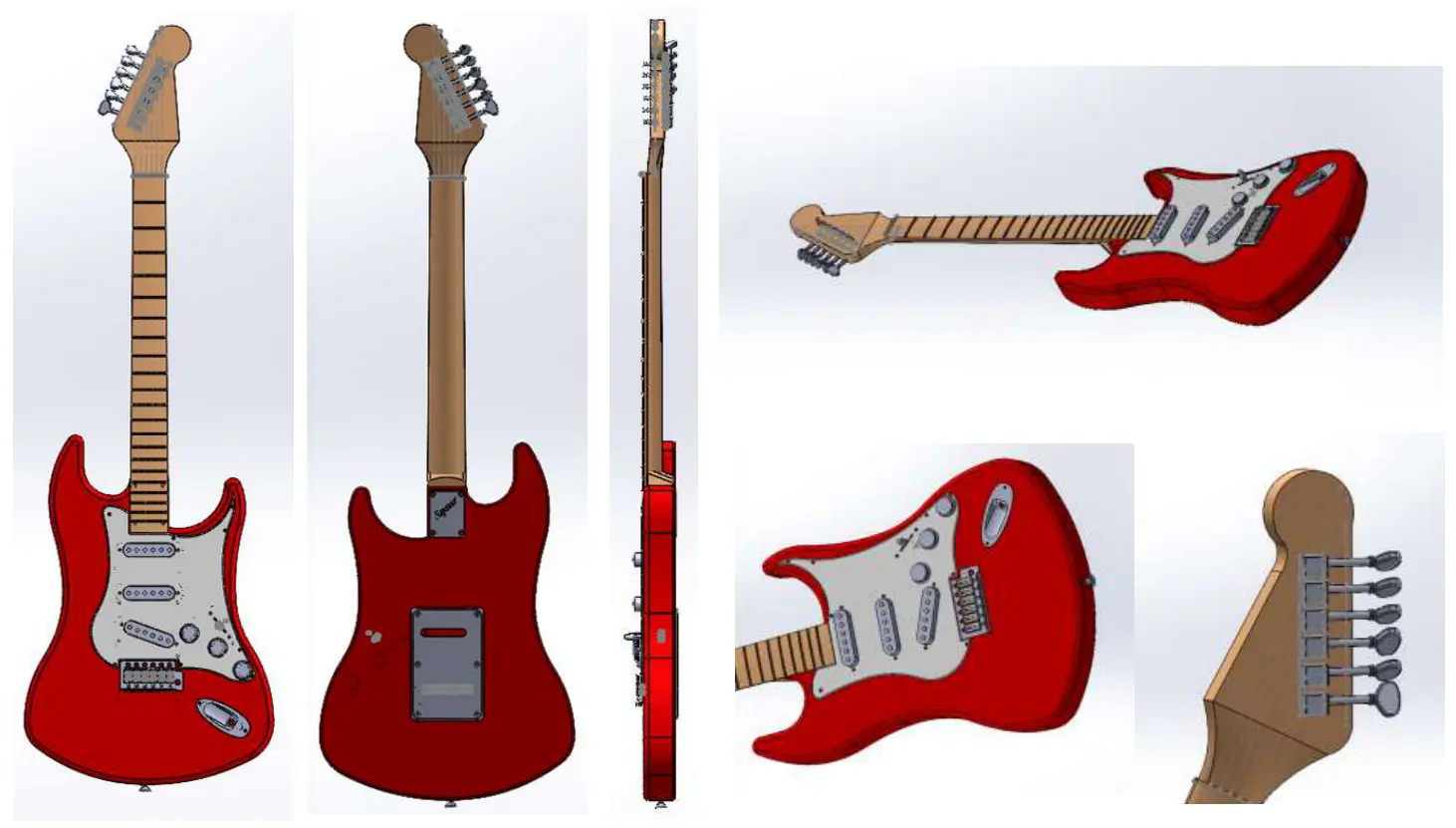
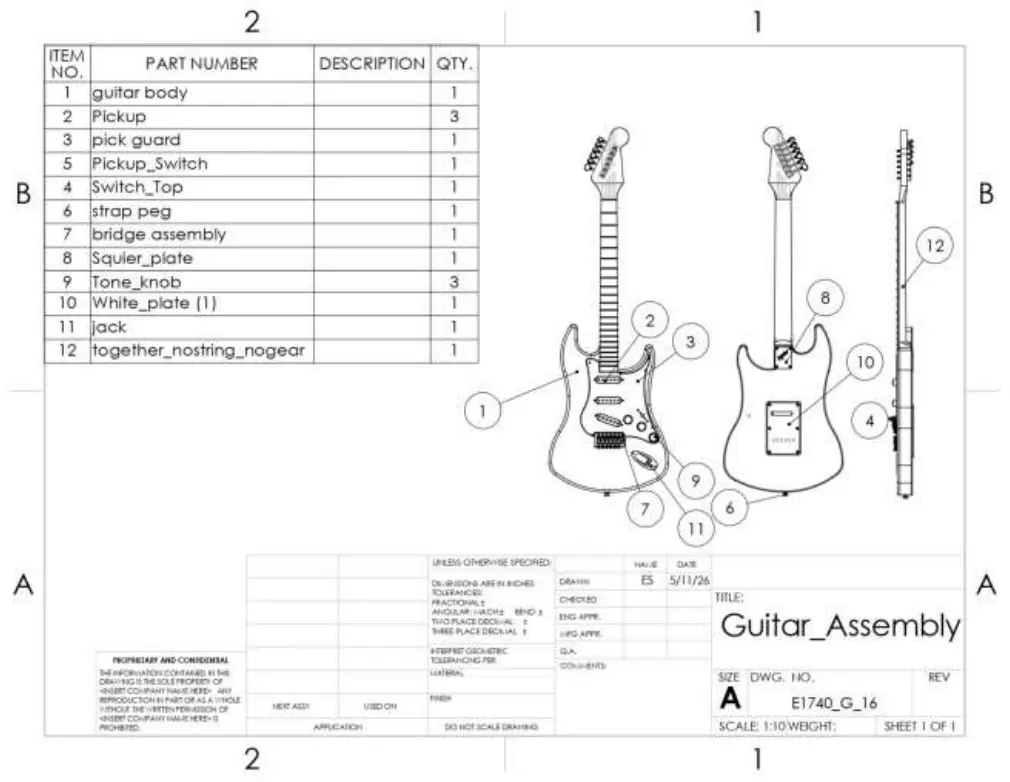
Starting from a Strat-style reference, I modeled the body, neck, bridge, and hardware as separate parts. I assembled them in SolidWorks, checked how they fit from front, rear, and side views, and made dimensioned part and assembly drawings.
Find the stress concentrations
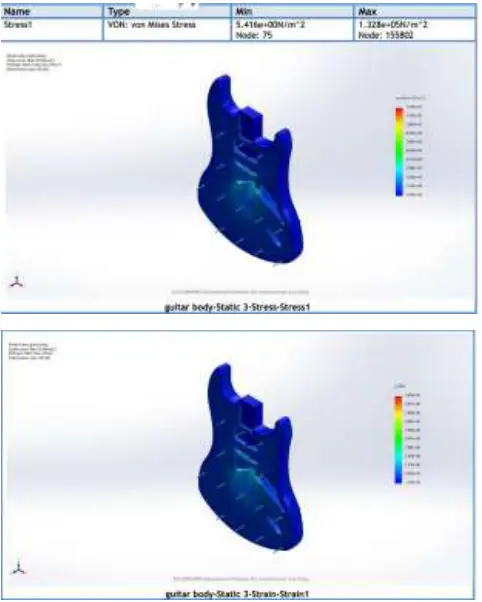
In the alder body’s structural simulation, the bridge and lower opening stood out as weak points. Those areas had less material around them, which concentrated stress. The result helped identify where geometry and reinforcement mattered most before machining.
Check motion and string alignment
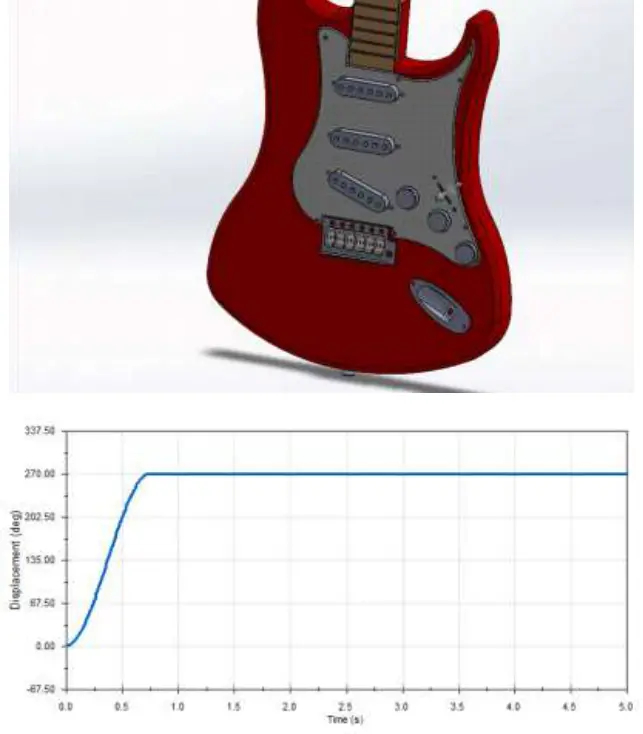
I drove the tone knob through 270° in 0.75 seconds and plotted displacement over time. It moved smoothly in the model. I also ran a tolerance stack from the bridge edge to the high-E slot at the nut. The modeled minimum and maximum both rounded to 53.506 mm, so the tested tolerances did not meaningfully shift that dimension.
Run thermal and airflow studies
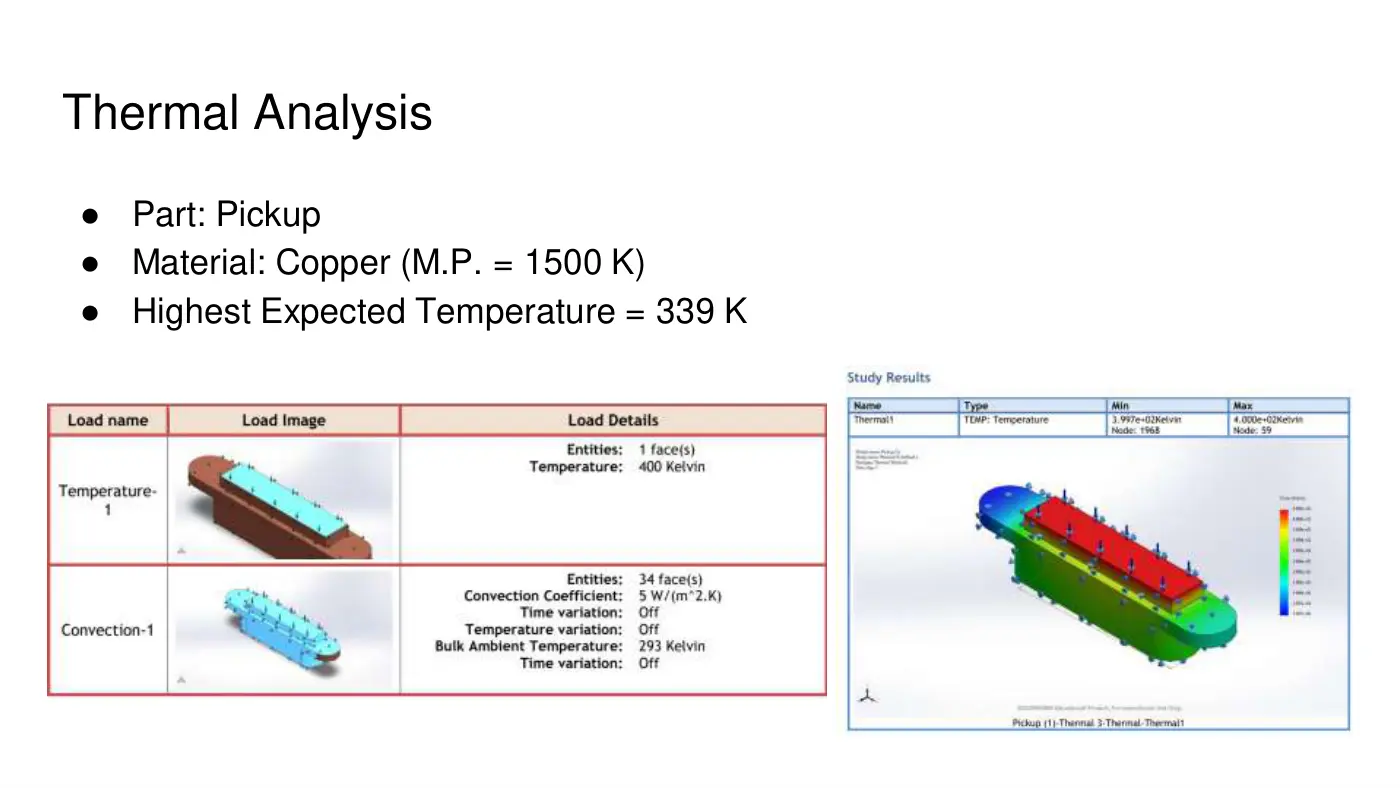
The copper pickup reached a predicted peak of 339 K in the thermal model. In a separate CFD study of the audio jack, pressure was highest at the input opening. Flow slowed around the shell and sped up through the opening.
Plan the cuts and finish by hand
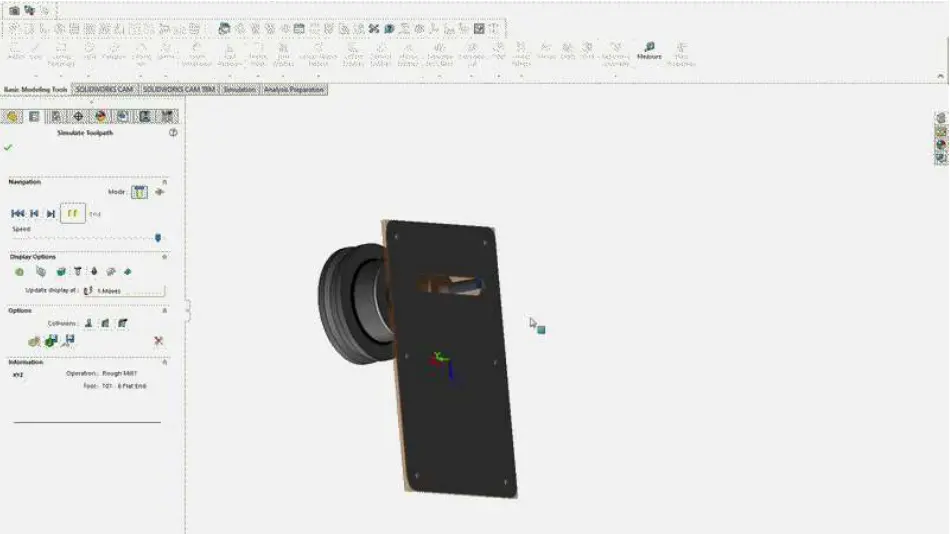
I used CAM to generate G-code for the back plate’s six holes, center area, and filleted edges. I CNC-machined the body and neck and hand-leveled the frets to a 0.01 in height tolerance.
Original presentation
Electric Guitar Presentation
Slide 35 of 38Thermal analysis
Up next / 05
Finger Contracture Splint